Enterprise Architecture Blueprint Development Guidelines for GoR.
The purpose of these guidelines is to help public entities and GoR’s private partners to have a common understanding of EA practice and to guide the systematic mapping of the institution’s IT landscape (Blueprint) in clear steps namely: the ASIS situation, the To-Be situation, the Gap analysis and the Roadmap.
- Introduction
- Reference Documents
- Compliance
- Blueprint Development Guidelines
- EA Development Value Chain
- Business Requirements Analysis
- Baseline Blueprint Development
- Develop Target Blueprint
- Target Blueprint Development
- Gap Analysis
- Create Roadmap for Target Blueprint Implementation
Introduction
The purpose of these guidelines is to help public entities and GoR’s private partners to have a common understanding of EA practice and to guide the systematic mapping of the institution’s IT landscape (Blueprint) in clear steps namely: the ASIS situation, the To-Be situation, the Gap analysis and the Roadmap.
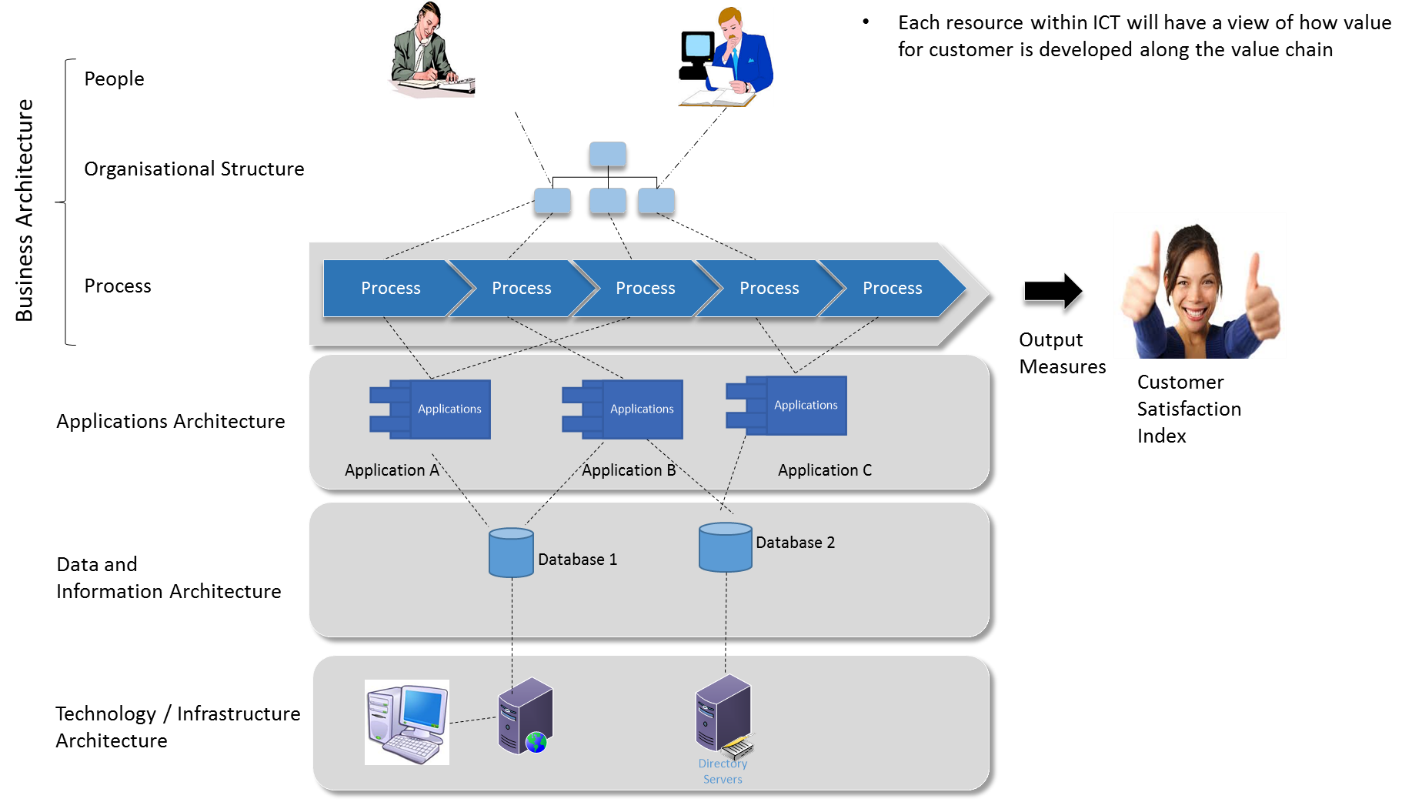
In order to bring alignment between business requirements and IT capabilities, the blueprints are implemented through five (5) domains namely Business, Information, Data, Application and Technology/Infrastructure Architectures. These are commonly referred to as the BIDAT stack.
Depicted below are the domains that make up the BIDAT stack.
Business Architecture
This domain documents the business strategy, governance, business rules, goals, structure, processes and services. Within this initiative, the business domain will concern itself with the documentation of business services that IT supports.
Information Architecture
This domain is concerned with the transfer of information between different business units using IT solutions
Data Architecture
This domain looks at how data sources are managed within an environment. It concerns itself with the structuring of databases, defines the standards and models for data collection, storage, use, and management. All attributes for databases are stored within the Information Resource Catalogue (IRC). It documents the physical and conceptual data models, logical and physical data assets and data management resources. In some cases, due to the close association between the two domains,
The information and data architecture are combined and collectively referred to as information system architecture.
Application Architecture
This domain documents the systems to be deployed, their interactions, and their relationships to the core business processes of the organization. The key deliverables for this domain include the application models and an Application Portfolio i.e. a catalogue of all applications within a given environment.
Technology Architecture
This documents the hardware and software capabilities that are required to support the deployment of business, data and application services. This includes the documentation of the Enterprise Service Bus, IT Infrastructure, middleware, networks and communications channels.
Reference Documents
For full guidance and overall context purpose, this document should be read in conjunction with the following documents:
Government of Rwanda Enterprise Architecture Governance: This document outlines the governance structure around enterprise architecture within government of Rwanda.
Government of Rwanda Enterprise Architecture Framework: This outlines the boundaries, approach and notation that is used to model the enterprise architecture within Rwandan public entities.
Government of Rwanda Enterprise Architecture Principles: This defines the guiding principles for enterprise architecture that should be applied across all public entities.
Government of Rwanda Enterprise Architecture Standards: This document defines the standards that should be adhered to in documenting enterprise architecture artefacts.
Compliance
One of the key benefits for establishing an institution’s blueprint is to ensure the right selection and right scoping of IT projects, making clear the direct linkage between the IT project and the institution’s business requirements. The blueprint also serves as a framework to align with the integration and interoperability standards at national level.
It is in this context that the development of institution’s blueprint will be considered as the basic requirement for any IT project to be approved at RISA’s level before a request for funds is sent to MINECOFIN.
Blueprint Development Guidelines
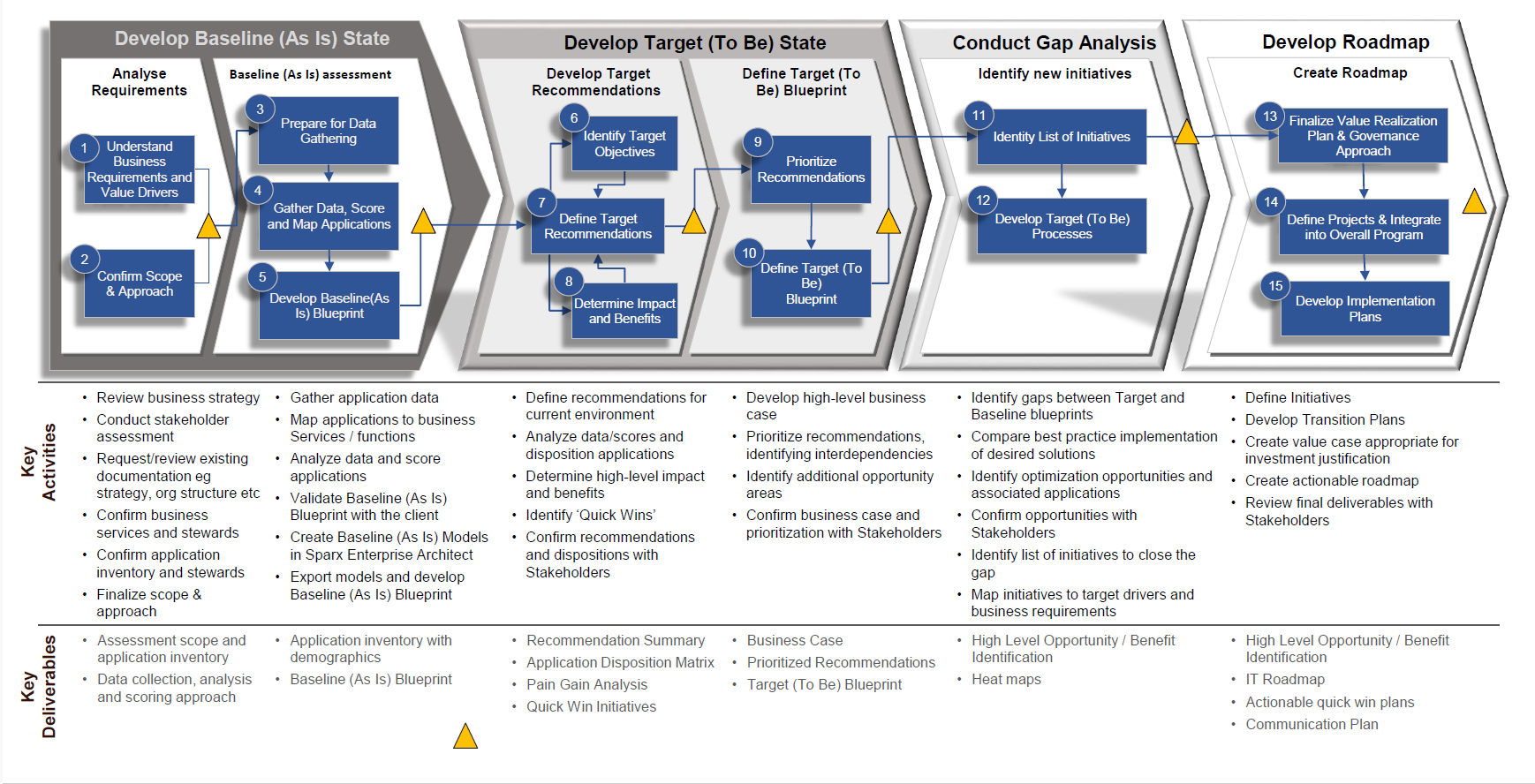
For ease of consultation these guidelines are provided in the form of diagrams organized in the following flow:
1. EA Development Value Chain
2. Business Requirements Analysis
2.1. Understand Business Requirements and Value Drivers
2.2. Confirm Scope and Approach
3. Baseline Blueprint Development
3.1. Prepare for Data Gathering
3.2. Gather Data
3.3. Develop Baseline Blueprint
4. Develop Target Recommendations
4.1. Develop Target Recommendations
4.2. Prioritise Target Recommendations
5. Target Blueprint Development
5.1. Define Target Blueprint
6. Gap Analysis
6.1. Conduct Gap Analysis
7. Create Roadmap for Target Blueprint Implementation
7.1. Create Road Map
EA Development Value Chain
Business Requirements Analysis
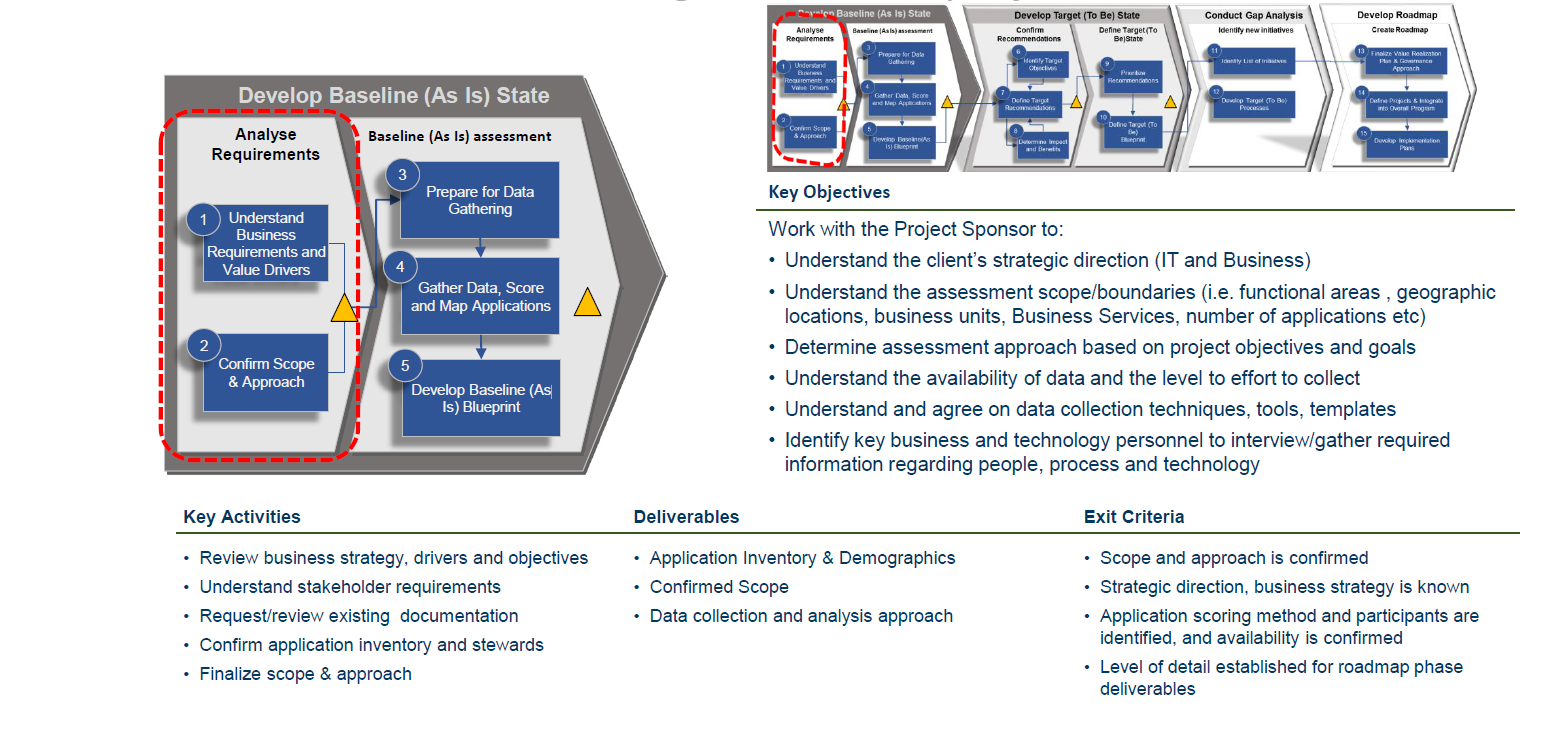
Liaise with RISA EA Team for alignment with project boundaries
Understand Business Requirements and value drivers
Review business strategy, government of Rwanda initiatives and goals
Review all available and relevant documentations including strategy documents, Operating models, Organisational structure, architecture models, government initiatives, mandates and drivers.
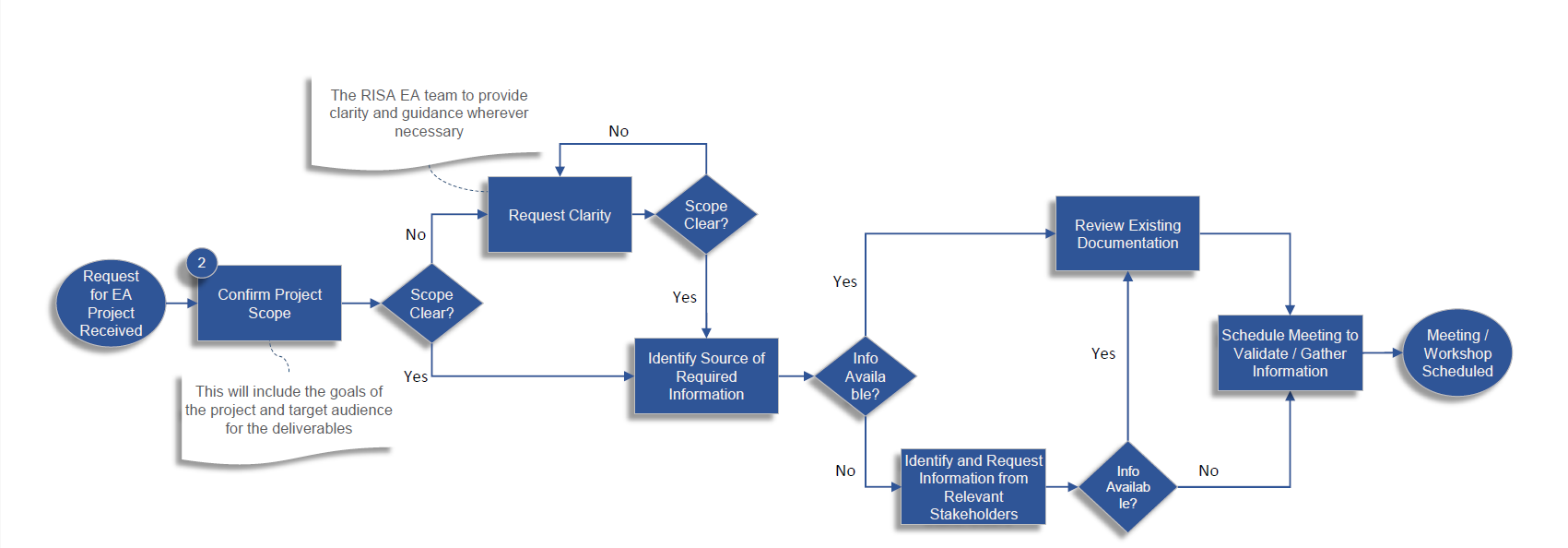
Confirm Scope and Approach
Establish project boundaries and familiarise oneself with the framework
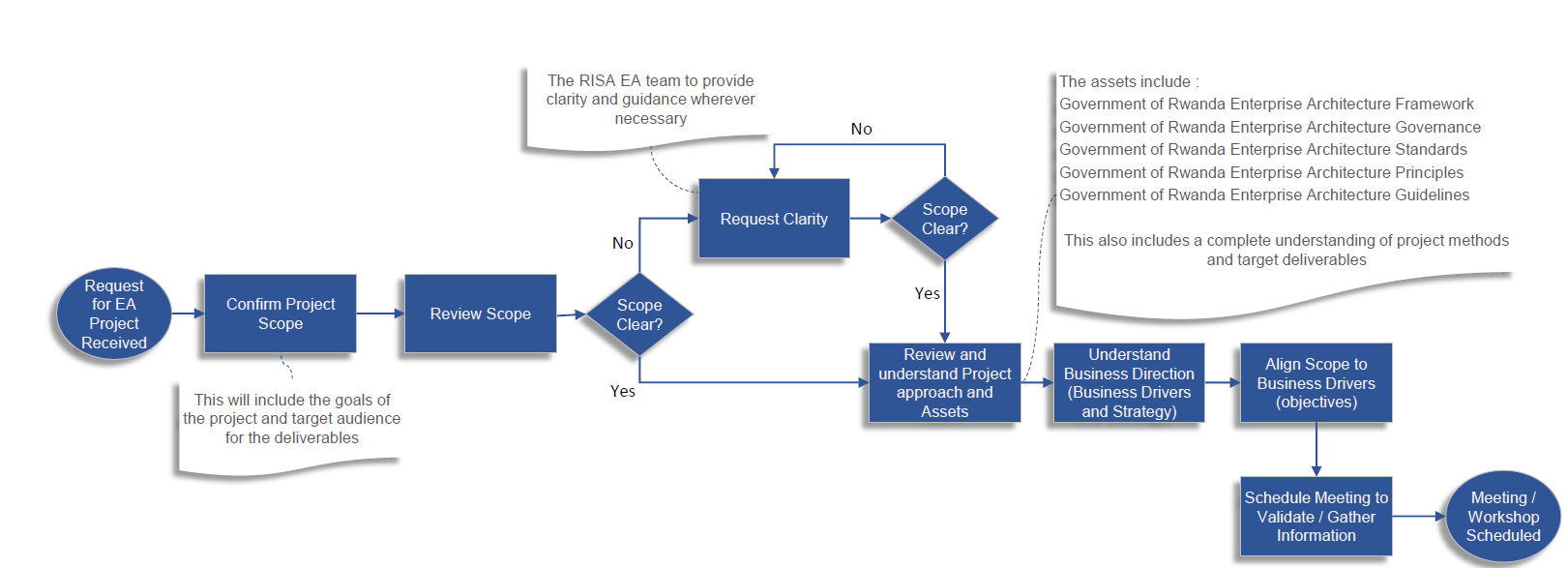
A clear understanding of both the scope of the project and framework will enable the architect to produce deliverables that are seamlessly align to the goals of Government of Rwanda
Baseline Blueprint Development
Gain deep understanding of available assets that guide the project
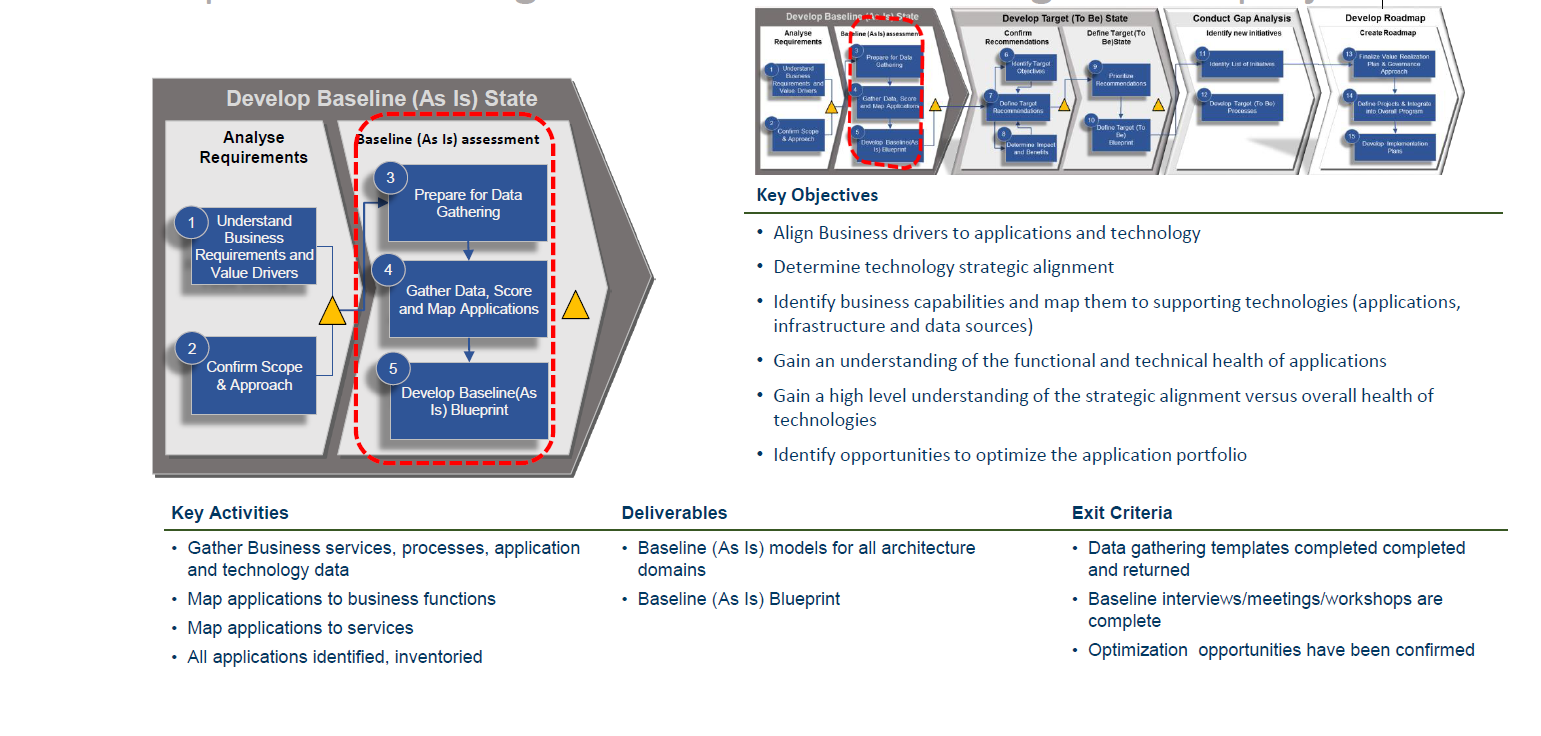
Prepare for Data Gathering
Pre-work for the exercise should involve learning how to apply the assets
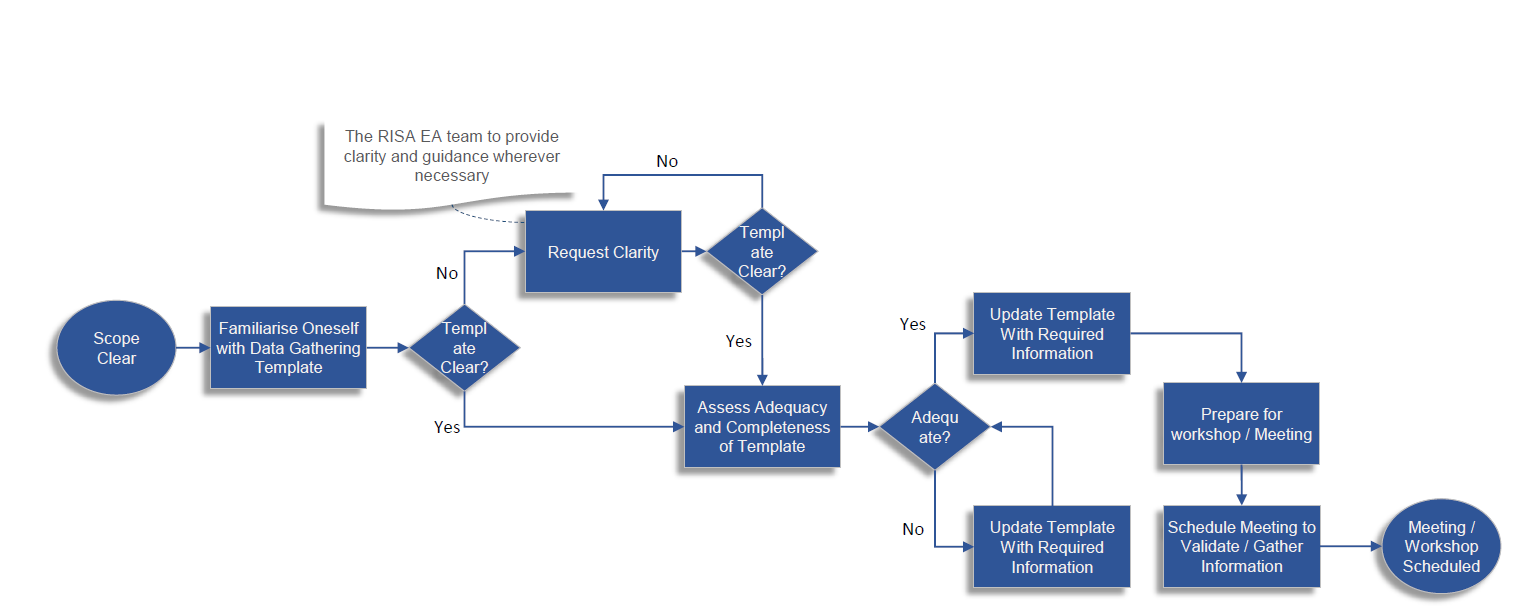
Familiarity with the data gathering template will facilitate the running of the workshops and data gathering proceses. The pre-work should also include familiarization with the deliverables and supporting assets.
Gather Data
Before the meeting, ensure that the stakeholder is aware of the project
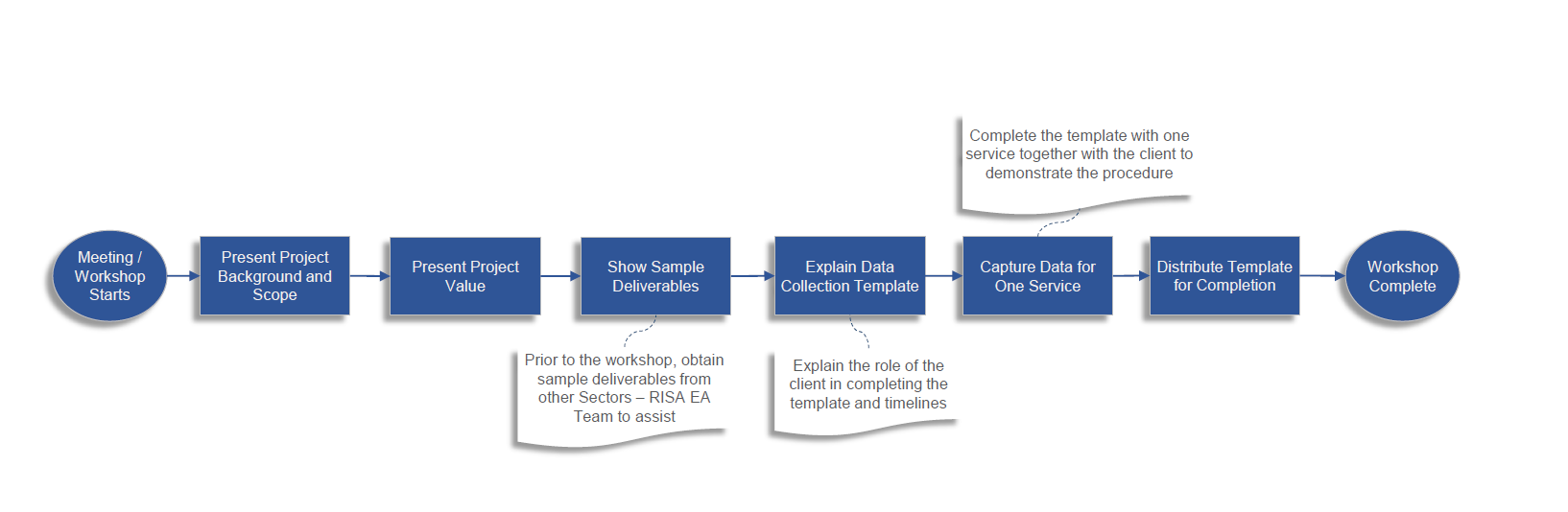
During the workshop, take time to explain expectations and target deliverables, use of assets such as Data Gathering Template, Framework, governance model etc.
Develop Baseline (As Is) Blueprint
Use guideline and template for blueprint development
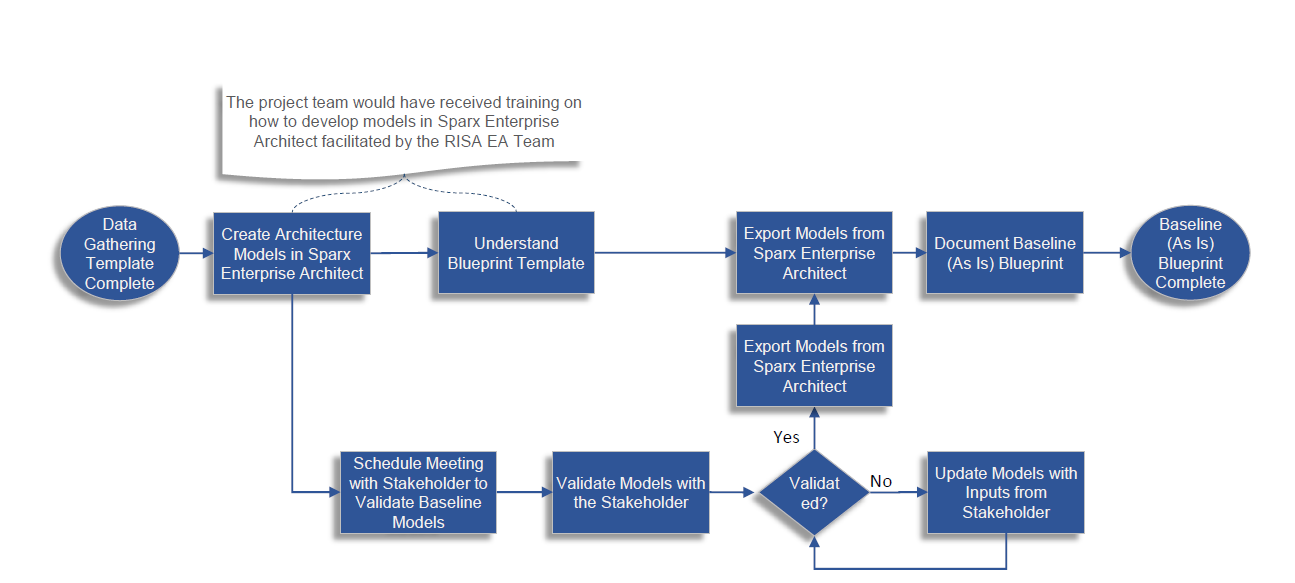
Use the structured template to complete the Baseline (As Is) Blueprint. The Blueprint must be developed in close collaboration with all stakeholders to ensure its acceptability and alignment with overall goals.
Develop Target Blueprint
Use available assets to create deliverables that are understood across the board
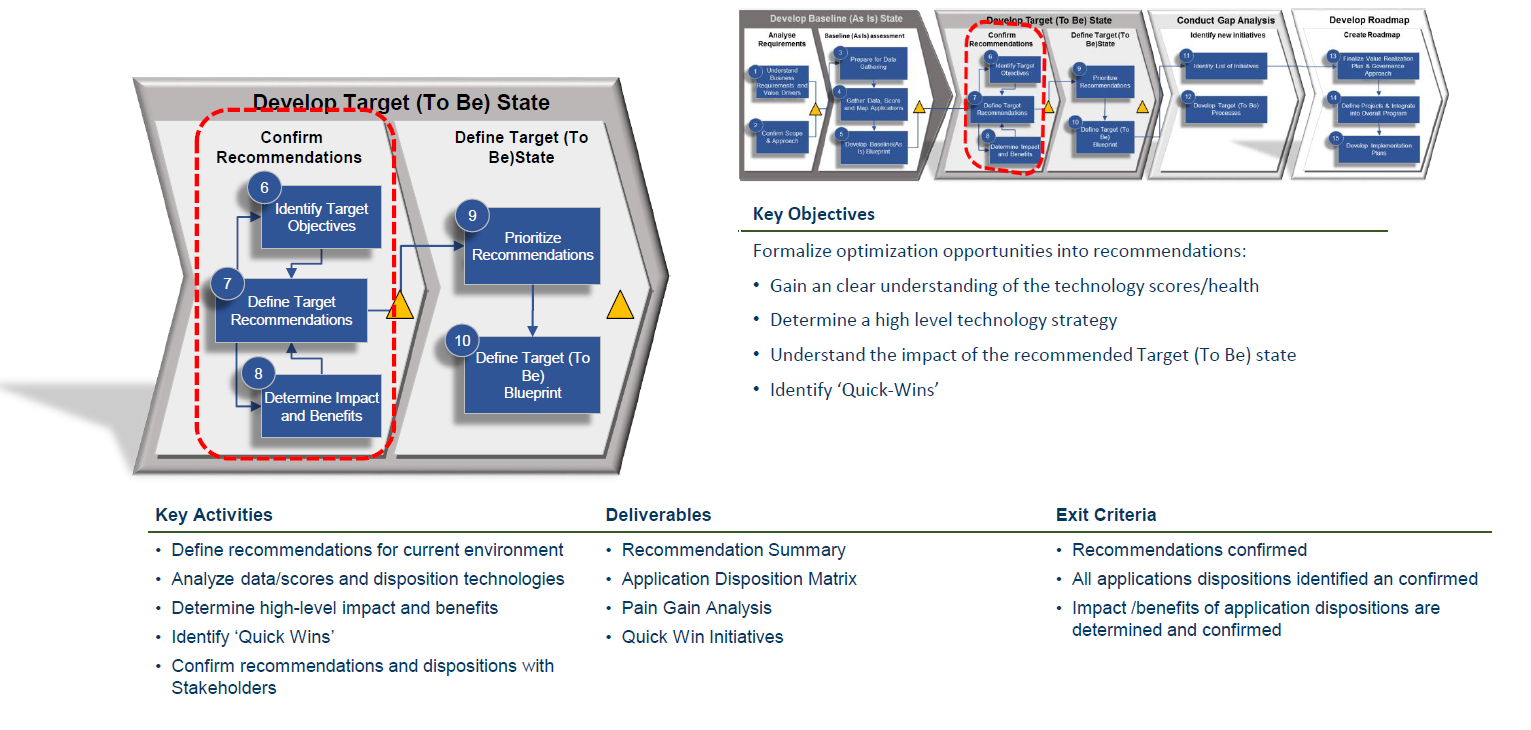
Develop Target (To Be) Recommendations
Recommendations must take into account overall government goals
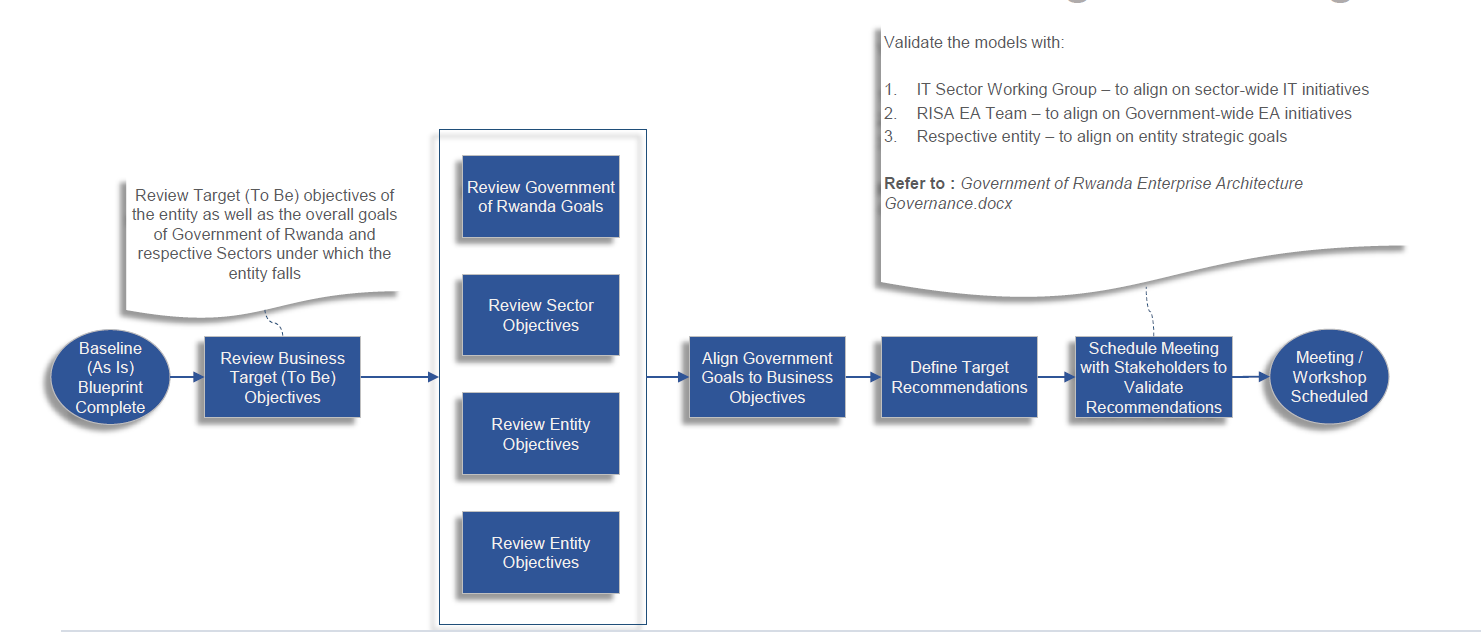
Standard procedure in determining in whether to Build, Buy or Enhance current solutions should apply. This, however, should always take into account all stakeholder requirements and goals
Prioritise Target (To Be) Recommendations
Stakeholder would be best placed to set priorities
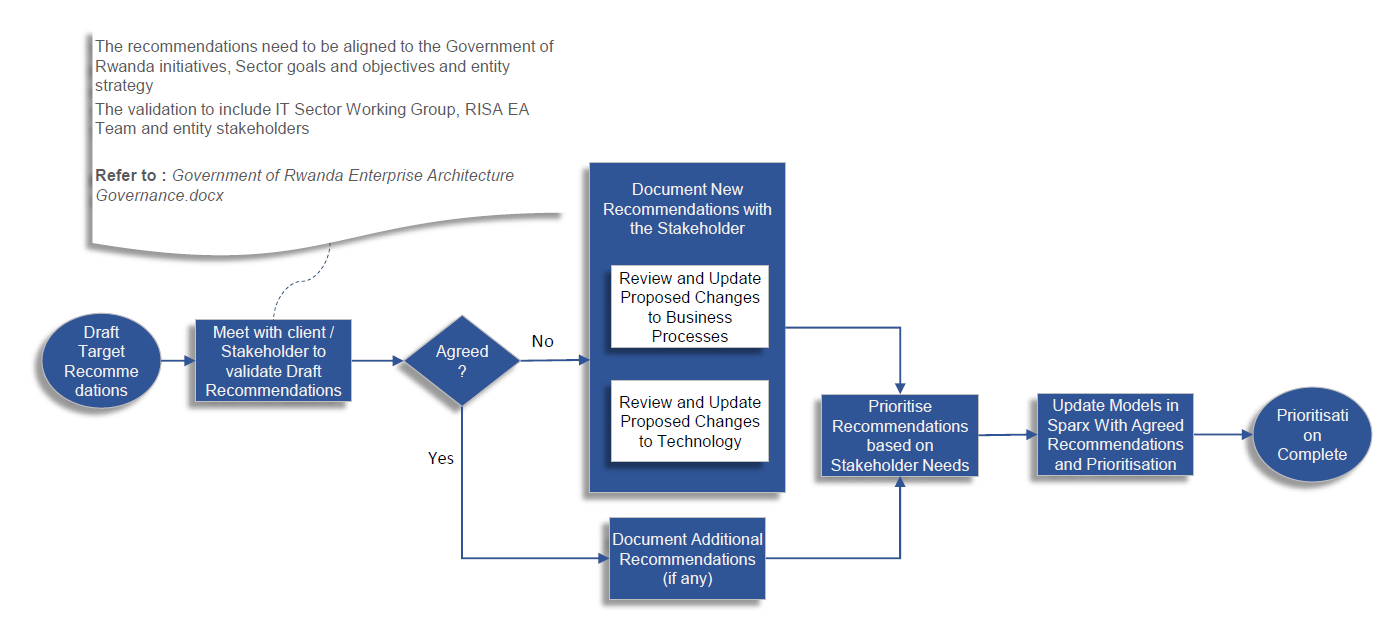
Target Blueprint Development
Align with all stakeholders for completeness of the deliverables
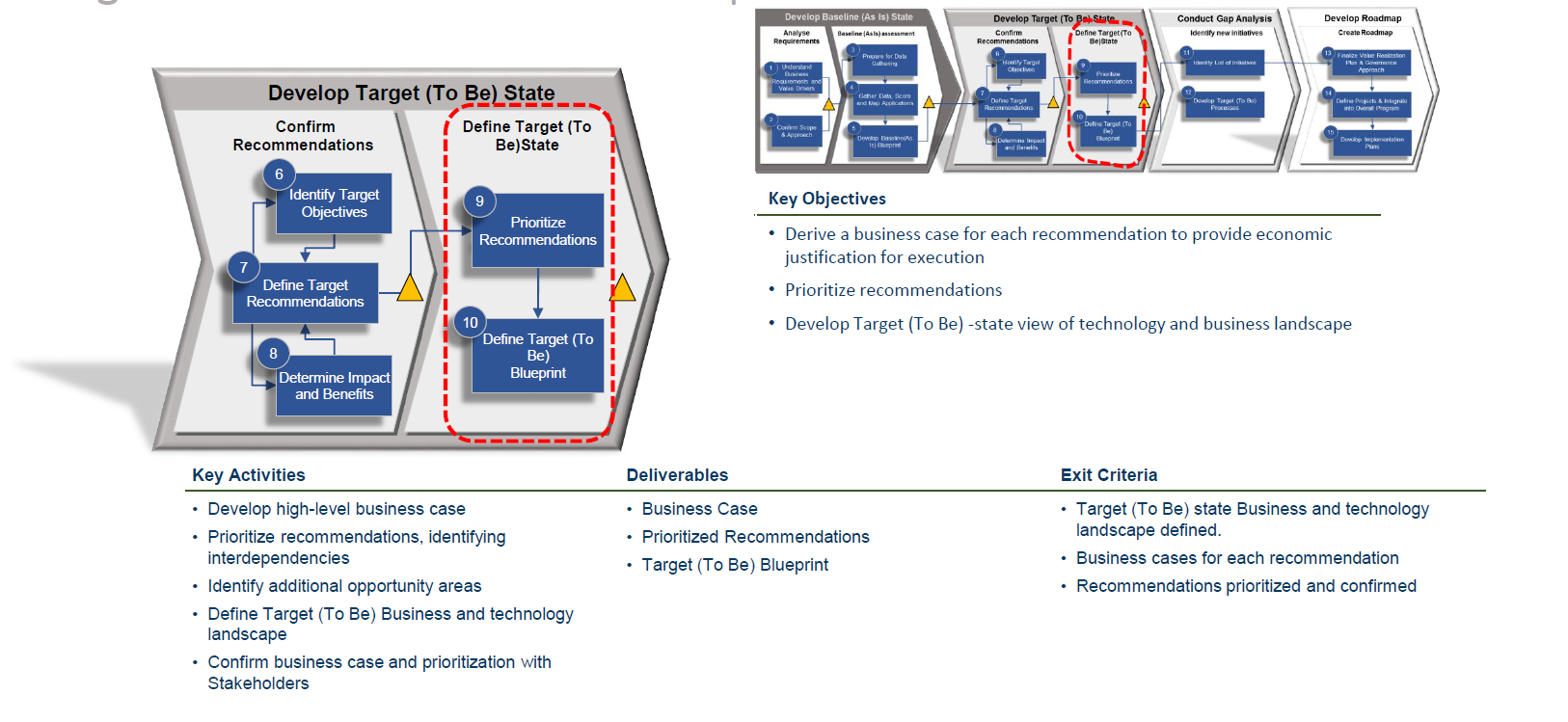
Define Target (To Be) Blueprint
Use reference models to guide the development of Target Blueprints
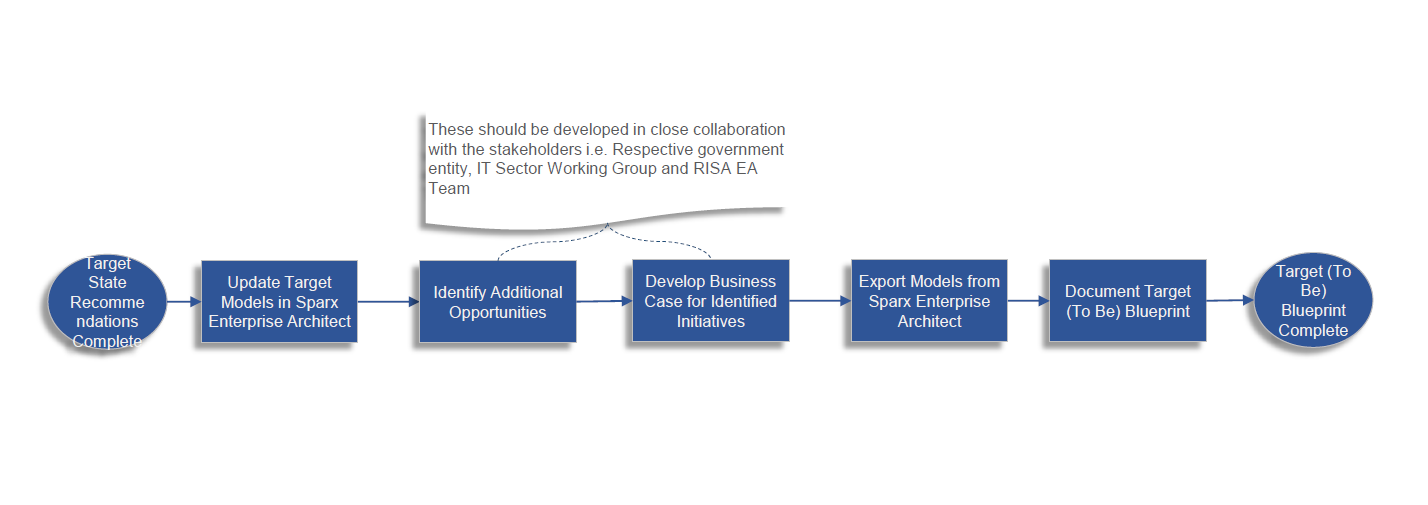
Depending on the changes to the architecture, various reference models are available to assist in developing Target Blueprints. Refer to RISA EA Team for assistance with overall strategic goals.
Gap Analysis
Recommended solutions to be aligned to Government of Rwanda capabilities
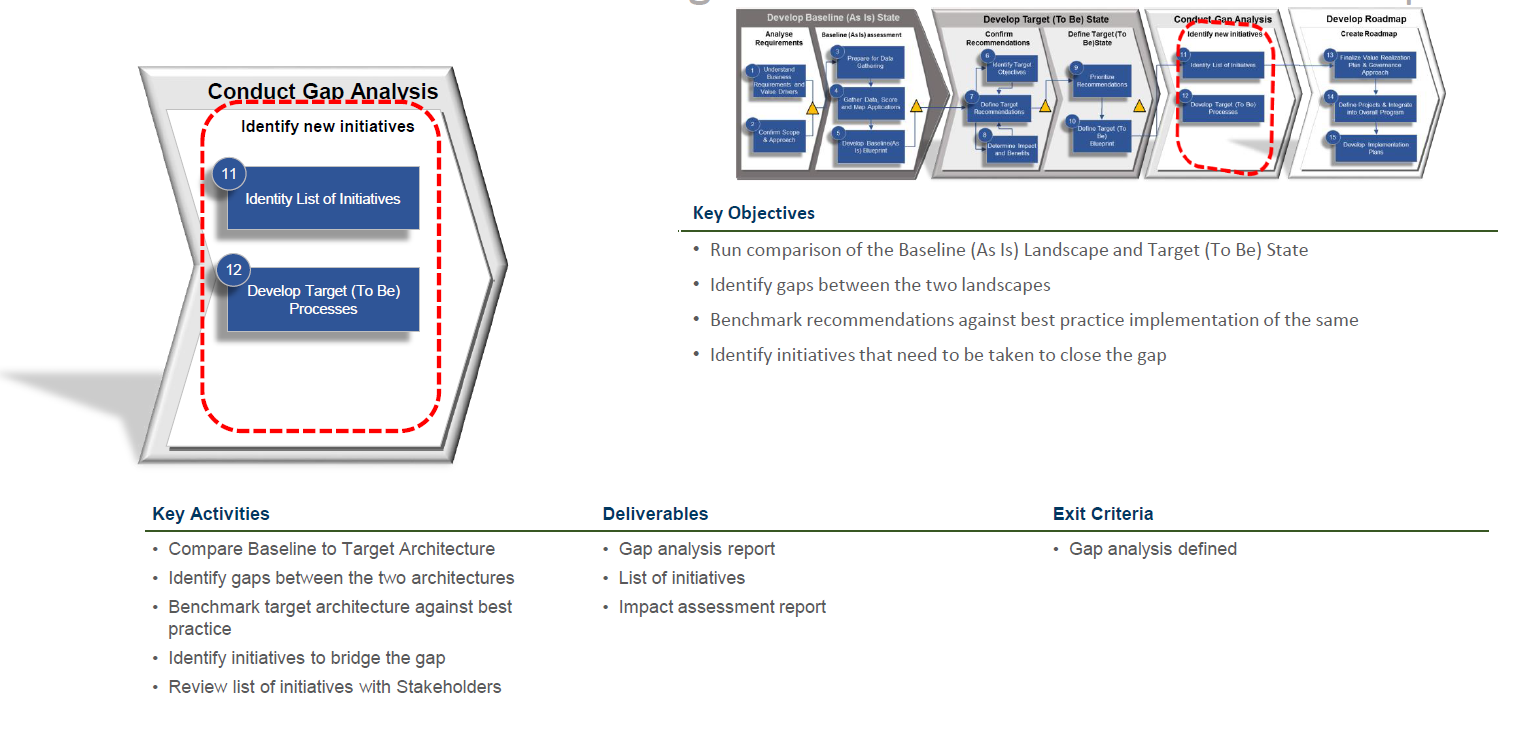
Conduct Gap Analysis
New initiatives and mandates should be considered in conducting gap analysis
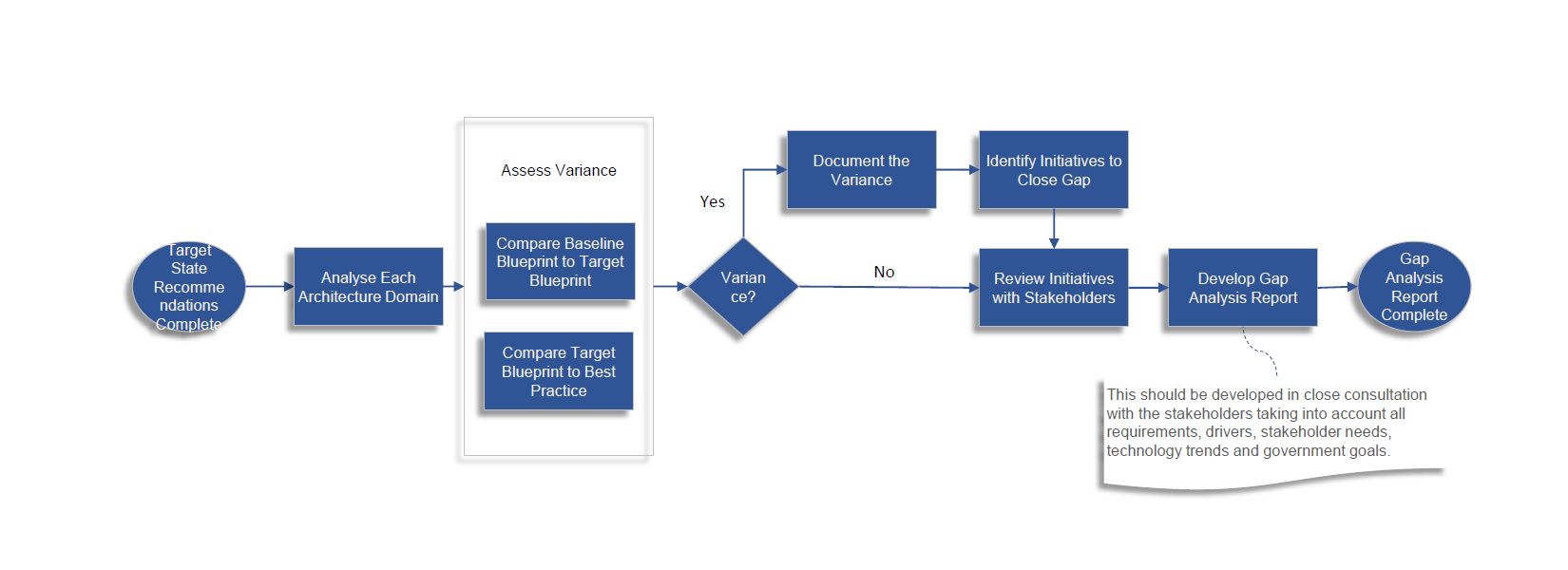
It is recommended that reference models be used to create ‘Heat Maps’ to depict highlight areas that need attention and new initiatives. This should be undertaken in close collaboration with stakeholders.
Create Roadmap for Target Blueprint Implementation
In close collaboration with all stakeholders to ensure seamless alignment
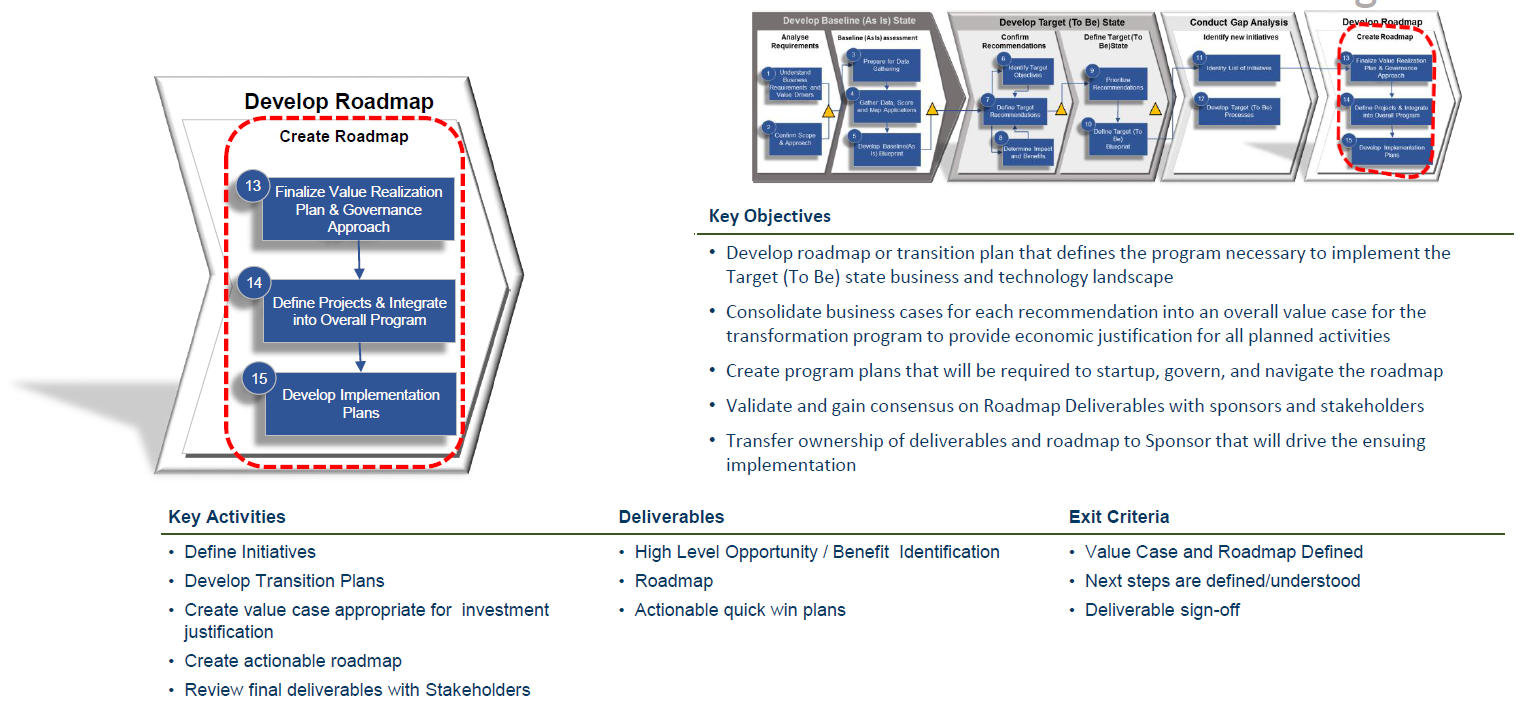
Create Roadmap
Roadmap development should be driven by the business case and initiatives prioritisation
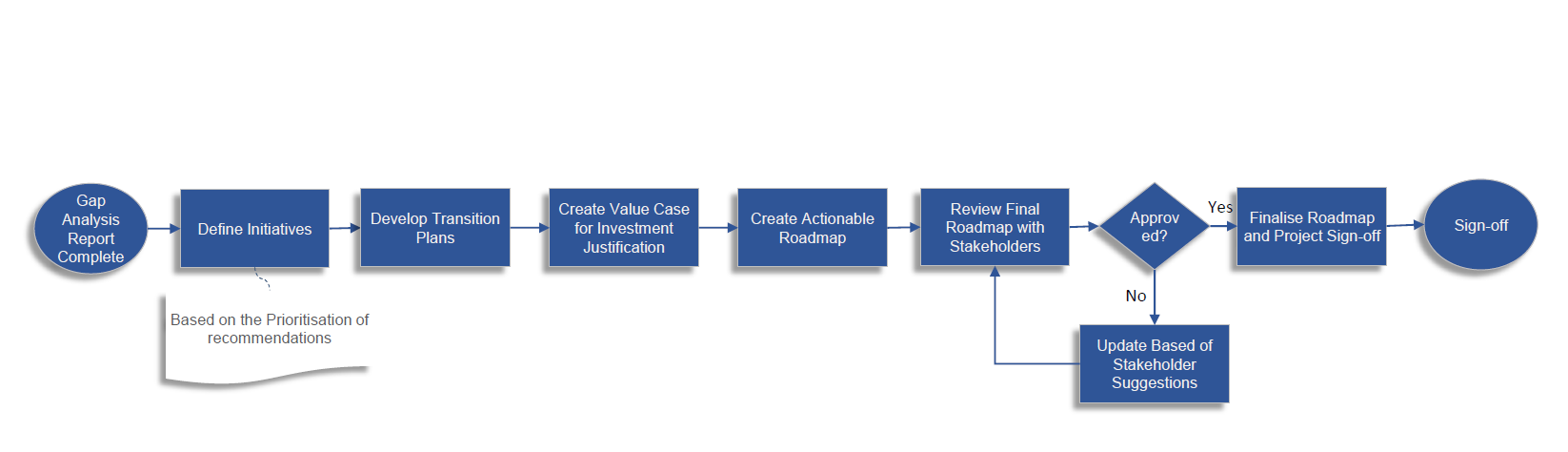
Close collaboration with stakeholders in developing the roadmap will ensure ownership of the implementation plans by the same.