IT Operations
Daily tasks management of the Chief Digital Officer
The role of a Chief Digital Officer (CDO) as a supervisor of the IT Department can be multifaceted, blending both operational and strategic responsibilities. Operational tasks, like ensuring systems run smoothly, data governance, and daily management, are crucial for the organisation's efficiency. However, without proper planning and delegation, these tasks can consume a significant portion of the CDO's time, potentially hindering strategic initiatives.
Effective planning and organisation are indeed vital. Delegating operational tasks to competent team members, such as business analysts, can allow the CDO to focus on strategic projects. This Strategy optimises the use of resources and expertise within the department, ensuring that both day-to-day operations and forward-looking projects receive adequate attention.
It's essential to assess the team's size and capabilities to properly delegate tasks. Larger teams should allow for more specialised roles, whereas smaller teams should require more flexible task allocation. A well-structured plan can ensure that both operational and strategic aspects receive the necessary attention without overwhelming any team member, including the CDO.
Below is a list of operational tasks which are under the responsibilities of a CDO (or Business Analyst), not restrictive:
- Systems Maintenance: Overseeing the maintenance and functionality of hardware, software, and network systems to ensure they run smoothly and securely.
- Data Governance: Implementing and enforcing data governance policies to maintain data quality, security, and compliance with regulations.
- Cybersecurity Management: Directing efforts to protect the organisation's IT infrastructure from cyber threats, including managing security protocols, incident response, and risk assessment.
- IT Infrastructure Management: Planning and managing the organisation's IT infrastructure, including servers, databases, cloud services, and other critical technology resources.
- IT Support and Helpdesk Management: Ensuring efficient and responsive IT support services for employees, troubleshooting issues, and overseeing help desk operations.
- Service providers and vendor management
Alongside these responsibilities, some general tasks are listed (not restricted) as follows:
- Budgeting and Resource Allocation: Developing and managing budgets for IT initiatives, including allocating resources effectively across various projects and departments.
- Vendor and Stakeholder Management: Collaborating with external vendors for software/hardware procurement and managing collaborations with stakeholders across the organisation.
- Policy Development: Developing and updating IT policies and procedures to align with organisational goals and industry best practices.
- Project Oversight: Supervising ongoing IT projects, ensuring they stay on track, meet deadlines, and align with strategic objectives.
- Performance Monitoring and Reporting: Tracking IT performance metrics, analysing data, and presenting reports to management to evaluate IT effectiveness and propose improvements.
These tasks require a balance between day-to-day operations and long-term strategic planning to ensure the smooth functioning of the organisation's IT landscape.
Strategic projects on which CDO or Business Analyst can be involved daily are various:
- Sector Digital Transformation Strategy and IT Roadmap Development: Creating long-term plans that align IT initiatives with the Ministry or sector’s goals, considering technology trends and potential impact. It is also about developing and implementing strategies to leverage emerging technologies (like AI, IoT, or cloud computing) to enhance processes and outcomes. It covers the implementation of the Rwandan National Digital Transformation Plan-Smart Rwanda Master Plan
- Citizen’s Experience Enhancement: Identifying opportunities to use technology to improve citizen experiences, potentially through better user interfaces, personalised services, etc.
- Innovation management: Leading efforts to explore new technologies, conducting research and development activities to identify opportunities for innovation within the organisation.
- Strategic Partnerships: Identifying and fostering partnerships with tech vendors, startups, or research institutions to bring innovative solutions and stay ahead in the industry.
- Change Management: Overseeing change management processes related to technology adoption, ensuring smooth transitions and buy-in from stakeholders.
- Data Strategy and Analytics: Developing a comprehensive data Strategy, including data governance, analytics capabilities, and leveraging data insights for informed decision-making. On this task, close collaboration with the National Data Center is key.
- Cybersecurity Strategy: Creating and implementing robust cybersecurity strategies to safeguard the organization against evolving threats and ensuring compliance with regulations. On this task, collaboration with the NCSA is key.
- IT Talent Management and Development: Developing strategies for retaining IT talent to maintain a skilled and motivated workforce. As the recruitment and training parts are under the management of RISA, the CDO should focus on the retention of talent.
These strategic tasks involve vision, planning, and alignment of technology with the organisation's overall objectives to drive innovation, efficiency, and competitive advantage.
Technical department structure (IT resources)
The CDO as a Head of the IT Department works in a structure defined according to the size of the Ministry’s ICT team. Components of the structure are:
- IT Project Management: Oversees and coordinates the planning, execution, and completion of IT projects within the department. This component is managed in many cases by the CDO and the Business Analyst (s).
- Software Development/Engineering: Engages in creating, maintaining, and enhancing software applications critical to the organisation's operations. It includes the development, design and implementation of new software solutions or modification and upgrade of the existing ones, provides quality assurance and technical evaluation of new and legacy systems and software products in the sector. The Senior Developer oversees this role and is supported by a team of developers.
- Network Operations: Responsible for maintaining and managing the organisation's network infrastructure, ensuring connectivity, security, and reliability. The network specialists are in charge of that.
- Systems Administration: Manages and supports servers, operating systems, and related software to ensure smooth operations and security across the organisation. The System Administration Specialist is in charge of the system Administration.
- Database Management: Handles the design, implementation, and maintenance of databases vital for storing and retrieving organisational data. The Database Administration Specialist is in charge of this role.
- Help Desk/Technical Support: Provides frontline support to users, troubleshooting technical issues, and offering guidance on IT-related problems. The IT Help Desk Officer is in charge of this role within the CDO team.
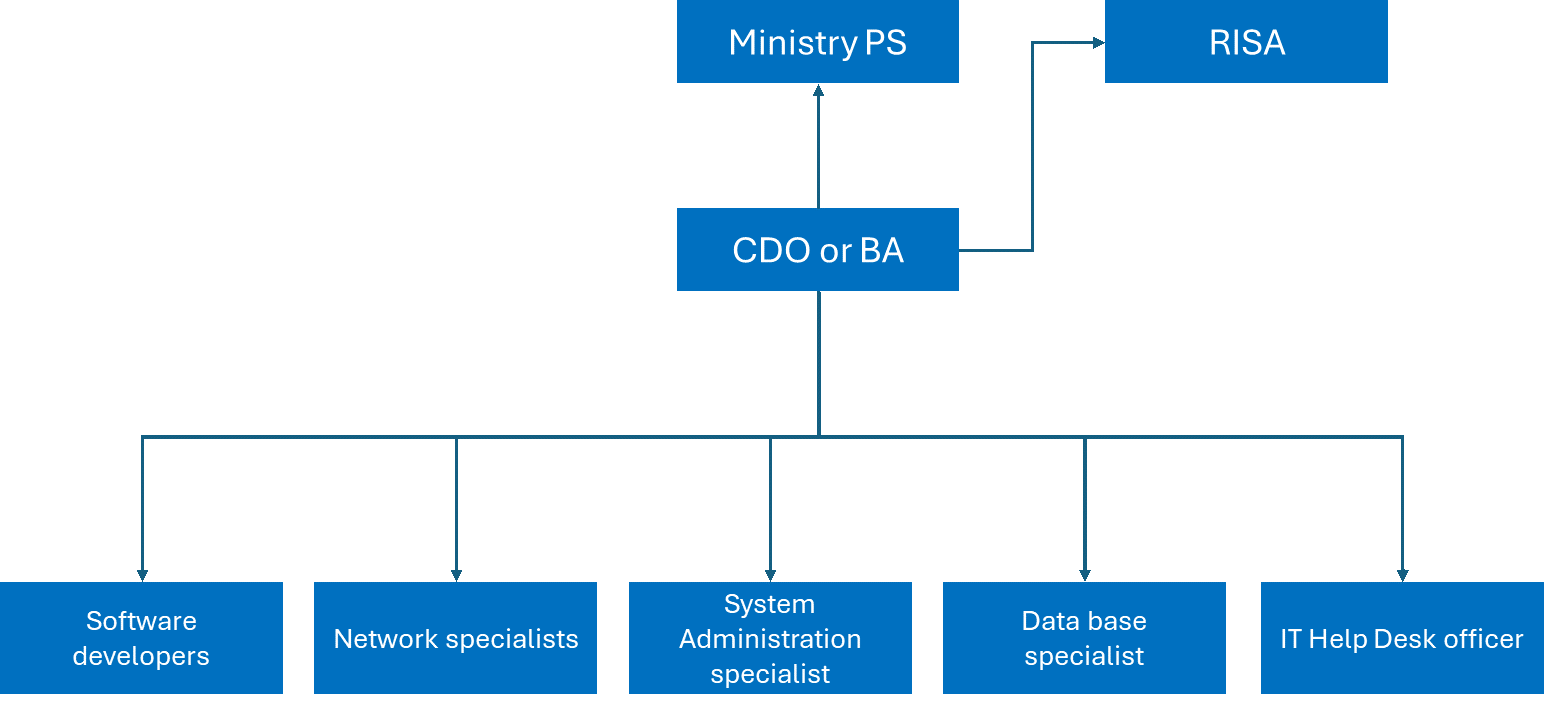
Figure 12: CDO Office Structure
ICT related Logistics and ICT Assets Management
An ITSM tool with built-in asset management functionalities becomes essential for enhanced asset management across various sectors within the Ministry.
The Chief Digital Officer (CDO) holds responsibility for acquisition, maintenance, and disposal of ICT assets within his/her or her Ministry. In this regard, collaborating closely with the Logistics Office of the Ministry is key.
The responsibility for managing the database of IT assets typically falls under the purview of the IT Support staff, who collaborate with the Logistics Office of the Ministry. Together, they ensure accurate and up-to-date records of IT assets are maintained, covering acquisition, maintenance schedules, and disposal processes.
At the national level, the Ministry of Finance utilises a budget management tool that incorporates a module dedicated to asset management. This tool likely assists in tracking, managing, and accounting for ICT assets within the Ministry. CDOs are required to fill in this tool the Asset of their Ministries.
RISA has a system requiring all government institutions to register their ICT assets. This centralised system aims to create a comprehensive inventory of ICT assets across government entities.
Some individual Ministries have their own independent asset management systems or processes apart from the Ministry of Finance or RISA systems. These additional systems could cater to specific needs or provide supplementary tracking mechanisms for assets within those institutions.
The collaborative efforts between the CDO and Logistics Office of the Ministry highlight the importance of a coordinated approach to asset management. The goal is to maintain accurate records, streamline acquisition processes, ensure efficient maintenance, and manage proper disposal of IT assets across government institutions. An ITSM tool can be implemented to manage ICT assets and harmonise the practices in all government institutions.